
Shopping smarter: spreadsheet, seller, agent, product
Five short, specific habits that apply to any shopping-agent order, not just one placed through Didpop. Each is a judgement call this guide could actually back up with a reason, not a vague "be careful out there".
Checking whether a directory still works
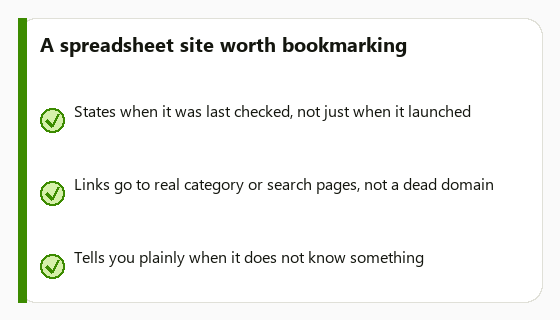
What makes a useful spreadsheet site, in practice, is less about design and more about maintenance. Look for a stated last-checked date, not just a launch date, and treat sites that never update their figures as stale by default. Click a handful of category cards before you trust the rest; a site with several dead links is a site nobody is maintaining. And watch how it handles not knowing something: a page that states "this guide could not confirm X" is more trustworthy than one that papers over every unknown with a confident-sounding guess.
Spotting a seller worth trusting
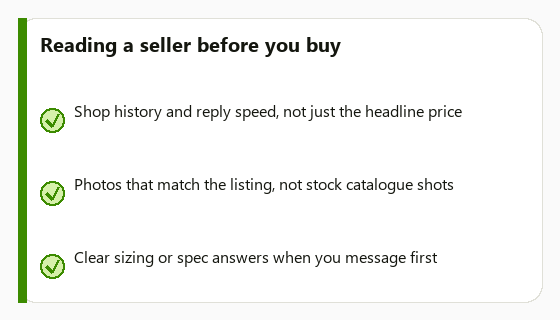
How to choose a seller worth ordering from depends on the platform. Weidian has no star-rating system at all, so you are reading the shop's own post feed and screenshots of past orders instead. Taobao does carry shop levels and detailed seller ratings (DSR), which are worth a glance before you commit to a listing. On any platform, message the seller with a real question (a measurement, a colour match) before ordering; a fast, specific answer is a better signal than any star rating.
Vetting a shopping agent properly
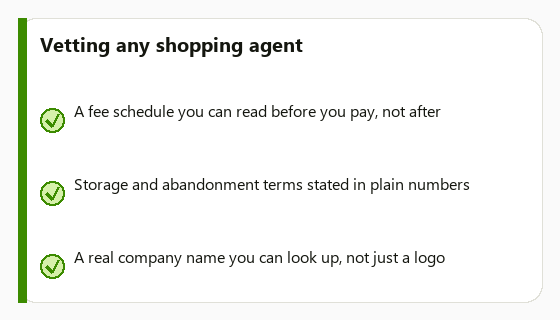
How to choose a trustworthy agent comes down to three checks that apply to any agent, not just Didpop: can you read the fee schedule before you pay, not after? Are storage and abandonment terms stated in actual numbers, not "reasonable period"? And can you find a real operating company name you could, in principle, look up, the way Didpop's own Service Agreement names XIN YANG INT'L TRADING CO LIMITED and a Hong Kong company number? An agent that fails all three is not automatically a scam, but it is one you are trusting on faith rather than evidence.
What a listing's photos don't show
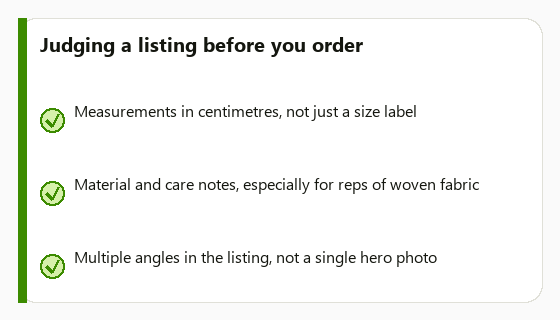
Deciding how to choose a product worth the risk starts with the numbers: a size label alone ("L", "42") is close to meaningless across sellers; look for actual centimetre measurements in the listing or ask for them. Material and care notes matter more for woven-fabric apparel than for simple cotton basics, a seller who cannot describe the material is a seller who may not know it either. And be wary of a listing with only one hero photo and no detail shots, that is often a sign the seller is working from someone else's catalogue image rather than their own stock.
Shopping precautions
A few things worth checking before you order, specific to how agent shopping actually goes wrong in practice, not general caution:
- Confirm size charts against your own measurements, not the label, before you submit an order; returns on custom or already-shipped items are limited.
- Read the QC photos closely when they arrive rather than skimming them, see the QC page for what to look for.
- Know the restricted-item categories (see the shipping page) before you order something borderline, like anything magnetic, liquid, or battery-powered.
- Keep your own order records (screenshots of the listing, the order number, payment confirmation); if a dispute comes up later, you will want them.
- Understand that finding something on a spreadsheet site does not guarantee the seller still has stock or that the agent will accept every order, listings go stale on the underlying marketplace faster than any directory can track.
Key points
- Judge a spreadsheet site by its last-checked date and whether its links still work.
- Judge a seller by platform-appropriate signals: DSR and shop level on Taobao, post history on Weidian.
- Judge an agent by whether its fees and storage terms are stated in numbers you can read before paying.
- Judge a product listing by real measurements and multiple real photos, not the size label alone.