
Didpop shipping lines and restricted items
Didpop bills shipping by the greater of actual weight and volumetric weight, and the divisor used for that calculation is different on every line. Here are the real line names and the restrictions that come with them.
Logistics and lines
Measure the box in centimetres on each side, multiply those three numbers together, then divide by a figure that varies by line; the result is volumetric weight. Compare it against the parcel's actual scale weight; whichever is larger is what you are billed for. A handful of real examples from Didpop's own published line list:
| Line | Volumetric divisor |
|---|---|
| EMS, China Post Registered Air Mail, SAL, Hong Kong Express | 6,000 |
| DHL Standard Express, most Hong Kong DHL and UPS variants | 5,000 |
| Mainland China SF Delivery | 12,000 |
| EUB | 8,000 (capped; freight is on actual weight up to 40cm per side) |
| Australia Post Air Mail, Australia Fastway Air | 8,000 |
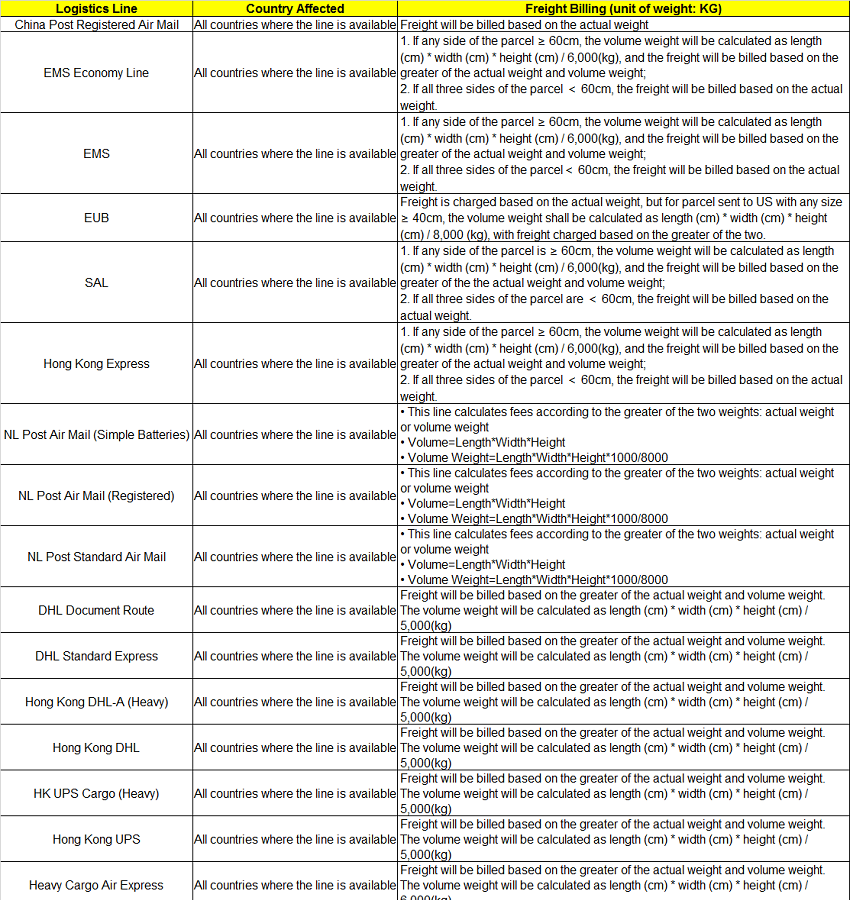
Didpop also separately documents the estimated weight shown at order time against the real weight recorded once an item is actually on Didpop's scale, the two can differ, and billing follows the real weight, not the estimate. A general international-package delivery agreement and a shipping-methods notice cover the baseline terms every line shares; line-specific declaration requirements, covered in the next section, sit on top of that baseline rather than replacing it.
Declared value and customs
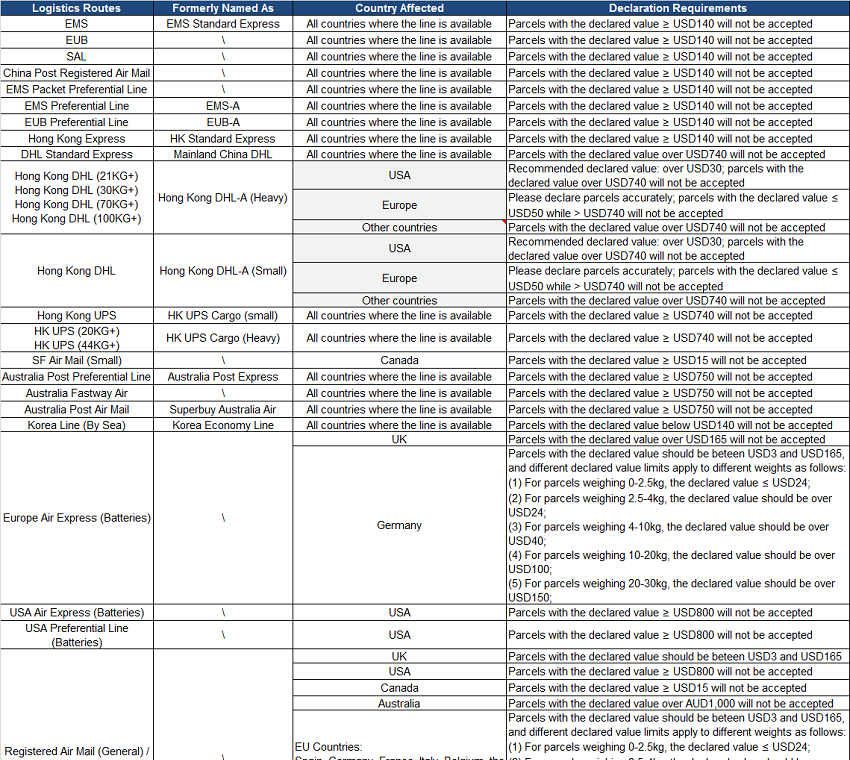
Several lines reject parcels outright above or below certain declared values, these are not small-print edge cases, Didpop publishes them as hard rules. A few real examples, read directly from Didpop's own line-by-line list:
- Most general lines (China Post Registered Air Mail, EMS, SAL, EUB, Hong Kong Express): parcels with a declared value of USD 140 or more will not be accepted.
- Hong Kong DHL to the USA: recommended declared value over USD 30; parcels over USD 740 will not be accepted.
- Registered Air Mail to Germany: declared value must sit between USD 3 and USD 165, with further weight-based minimums above that range.
Restricted items
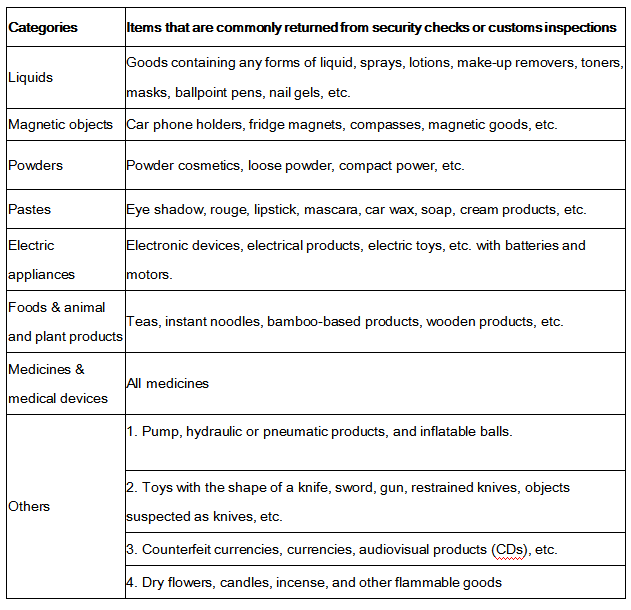
International logistics carries real category restrictions, and Didpop marks items it cannot ship once they reach the warehouse. Categories commonly returned at security checks or customs include:
Customs and clearance
Once a parcel leaves Didpop's warehouse, customs clearance in your own country is outside Didpop's control, Didpop ships it, your country's customs authority decides whether and how much to tax it based on the declared value and category. Didpop's help centre keeps a separate reference specifically on the customs inspection process and on how tax is levied against declared value, worth reading before you order something expensive or in a restricted category, rather than after customs holds it.
If you are consolidating several warehoused items into a single parcel, the combined declared value is usually what matters for the line's acceptance range, not each item's price individually, another reason to check a line's declared-value ceiling before you commit to combining a large order into one shipment.
Key points
- Billing takes the larger of two figures: scale weight, or volumetric weight worked out from the parcel's dimensions.
- Declared-value floors and ceilings vary by line and destination country; some lines reject parcels outright outside that range.
- Liquids, powders, magnetic objects, batteries, and several other categories face hard restrictions.
- See the guide's ship-and-receive stage for how a line is actually chosen during checkout.