
Stage three: ship and receive
Stage three of three. The item is inspected and waiting; now it needs a shipping line, a freight payment, and an address.
Settling on a shipping line
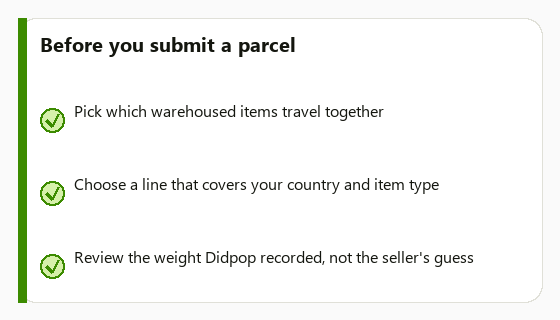
From your warehouse list, choose which stored items travel together, then pick a shipping line. Lines differ by country coverage and by how they calculate billable weight, see the shipping page for the real line names and their weight divisors. Didpop bills by the greater of actual weight and volumetric weight on most lines, so a light but bulky item can cost more to ship than its scale weight suggests.
If Didpop finds extra weight or fees after the parcel is already dispatched, the help centre describes a supplemental-payment step to collect the difference rather than holding the parcel indefinitely.
Declared value matters here too: several lines reject parcels outside a set value range outright, and the rest calculate any customs tax owed against the value you declare, not the original receipt. Didpop's help centre keeps a dedicated reference on tariff thresholds by country and line; check the shipping page for the specific examples this guide could confirm before you declare a value that looks convenient rather than accurate.
Clearing customs, then arriving home
Once a line is chosen and freight is paid, the parcel ships and Didpop tracks it the same way most international forwarders do: a tracking number, a carrier handoff, and a delivery window that depends on the line and the destination country.
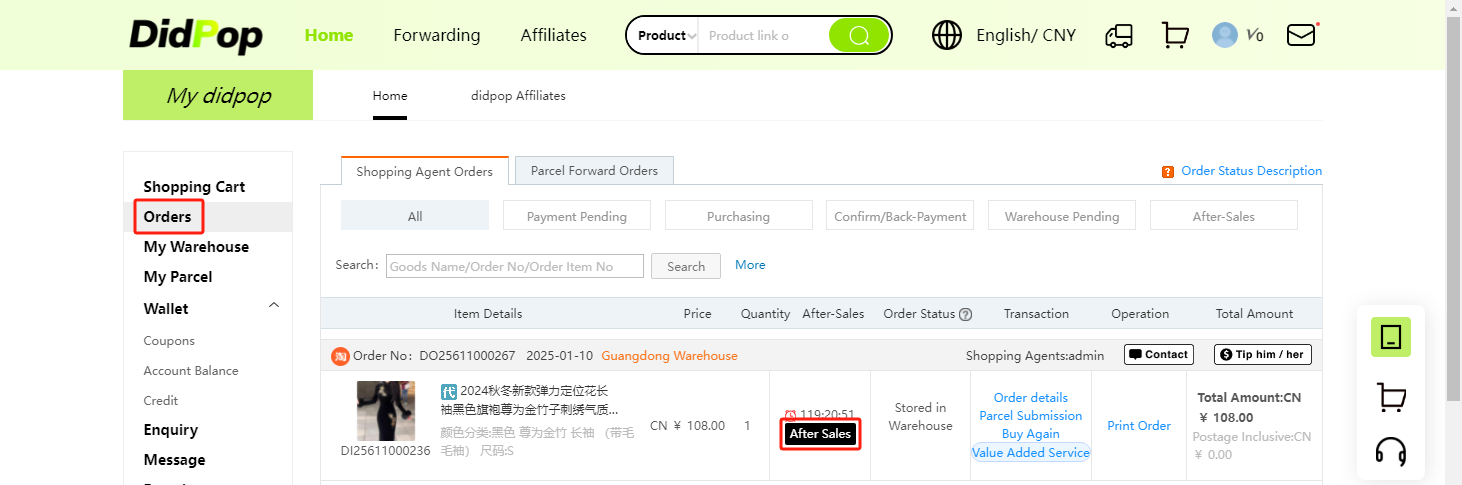
Didpop runs a 5-Day Return and Exchange Guarantee: within 7 days of the item being signed as received (in practice, within 5 days of it being recorded as warehoused), you can request a return or exchange under the seller platform's own rules. Custom-made items, items with tags or packaging already removed, periodicals, secondhand goods, underwear, adult products, and food are excluded by default.
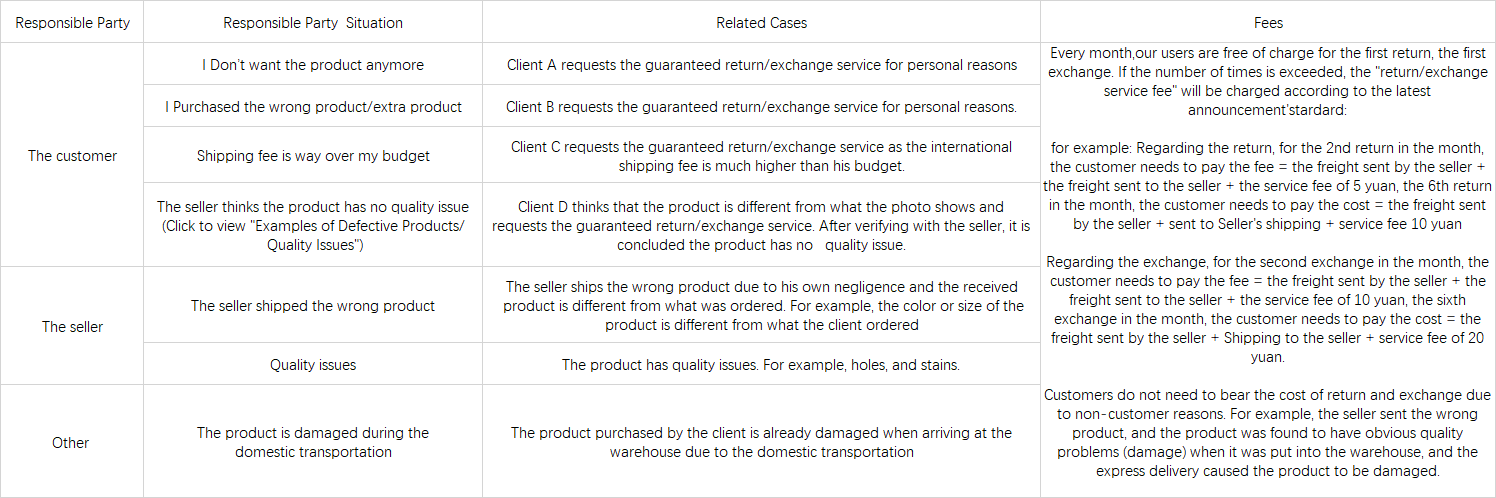
Didpop splits the actual return mechanics into two separate help-centre topics depending on where the item has to go back to: a domestic return (back to the seller or warehouse within China) and an overseas return (a parcel already shipped internationally that has to come back), with a related compensation-promise policy covering what happens if a return is lost or damaged in transit. Which one applies affects both the process and who initially pays the return freight, so check the specific help article rather than assuming the two work the same way.
Didpop also documents a separate parcel-safety option, sold as a value preserver or safety protector add-on, aimed at parcels carrying something expensive enough that the standard compensation terms would not fully cover a loss, alongside a general delay-compensation policy for parcels that take meaningfully longer than the line's usual window. Neither replaces good judgement about what line to choose for a fragile or valuable shipment in the first place, see the shipping page, but both exist for when something does go wrong despite that.
If you suspect a counterfeit: Didpop's formal Anti-Counterfeiting Policy states plainly that authentic goods only are permitted and that Didpop may decline orders or suspend accounts over suspected fakes. If one slips through, the help centre's counterfeit-complaint process is to contact customer service or email [email protected] with your order, payment proof, and a description of the issue; professional authentication costs fall on the buyer if one is needed.